MAIN STREET · ONE STREET, FOUR DECADES
Ohmsville
Ohmsville is a made-up town; the kit is real. One street with five shops and a garage at the end, walked in four decades — 1978, 1984, 1992 and 2002 — with the film Ray Kessler tells it in, the people who live there, and the Saturday in 1984 the front door is set on.
One street, and what is on it
Ohmsville is a made-up town. The kit is real. The town came out of the kit’s own catalogue line — a Radio Shack-style electronics lab — and a store like that was never downtown. It was in the strip between the pharmacy and the video store. That strip is Main Street, and everything here is set on it.
It is a town, not a city: small enough that the man who owns the electronics shop knows your name. Five shops, and a garage at the end. The corner drug store. The Electric Connection, which sells the kit. Charlie’s House of Fun, the arcade. Digital Underground, the video store. Volt City, the big one. Then your garage — the only building on the street that is yours.
The same town in every decade. The buildings never move; only what is in them.
Four decades of the same street
1978
Where the kit was born
Wood paneling and orange. The electronics shop sells the 150-in-1 with the wooden frame and the spring terminals, and the catalogue is a paper thing you keep by the bed. The arcade has not arrived yet, and the inventor films are all set here.
Sound: a transistor radio, fluorescent hum, and the measured clack of shop doors.
1984
The arcade decade, and the town’s peak
The strip gets neon. The arcade is loud, the big store has a computer on the counter, and the kit is now the 200-in-1. If Ohmsville has a default year, it is about now.
Sound: arcade tones, transistor radio chatter, footsteps, and the layered noise of a town waking up.
1992
The last analog decade
The arcade is half-empty, and the shop’s shelves are turning into pager clips where the resistors were. This is where things start getting sealed — the first devices you cannot open.
Sound: arcade noise receding into video playback, shop chatter, and the persistent electrical hum.
2002
The sealed box wins
The electronics shop becomes a phone store, the video store has its last night, and the arcade’s cabinets go to people’s garages. Warranty void if opened. It did not get worse. It stopped having screws in it.
Sound: quieter gaps between machines, snippets of playback, and the old town sounds still underneath.
The man telling you this
Ray Kessler was nine in 1974, and the box under his arm coming out of the electronics shop was the 150-in-1. He never left. He fixed televisions here for thirty-one years, so for three decades he was the man you brought the broken thing to. Then the sets started arriving with no screws in them, and inside four years the phone had stopped ringing.
He is the voice of the film above, and of every film on this site. He talks about the inventors, never as them, and he says what you are probably thinking.
The people of Ohmsville
Seven characters we invented to tell these stories — not the inventors on the other wall, who were real. Each one has a trade, a decade, and the kind of story that is theirs.
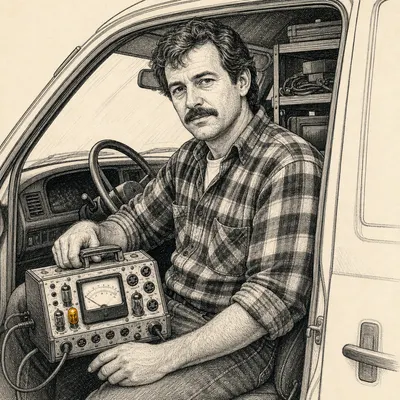 Ray Kessler TV and VCR repairman · 2000s
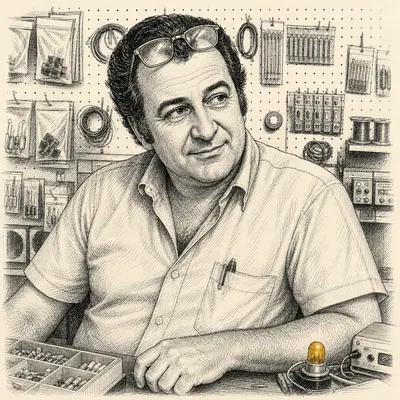 Sal Marchetti electronics shop owner · 1984
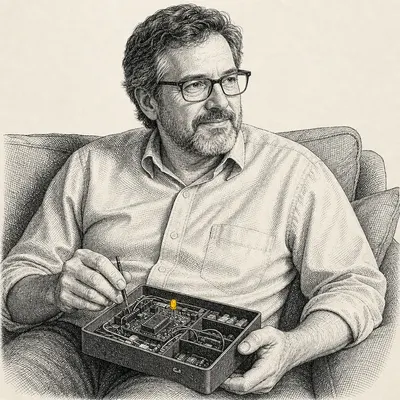 Nate Pruitt software developer · now
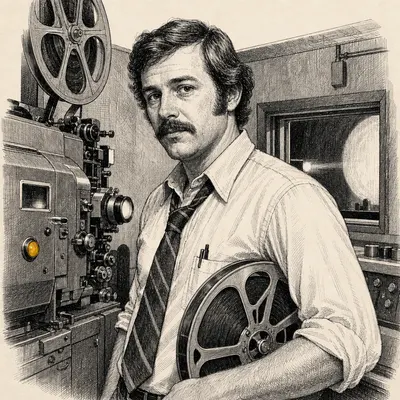 Emmett Crane movie projectionist, and Mr. Static on Friday nights · 1970s
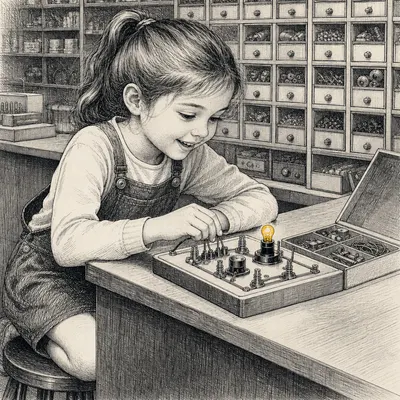 June Marchetti minding the front of her father's shop on Saturday mornings · now
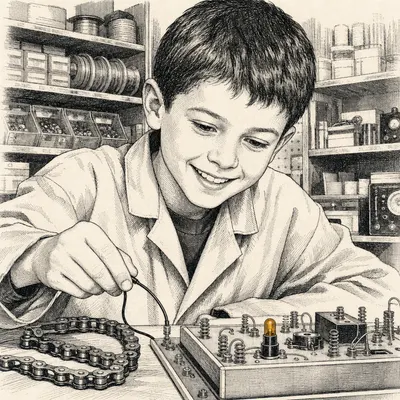 Teddy Ruiz shop hand and bike mechanic · now
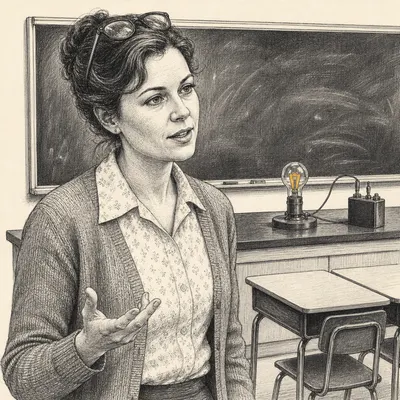 Vera Holcomb science teacher, and the Builders’ Club’s first · 1978
On the wall
Ten more portraits hang on that same wall, the inventors — unlike the people above, they were real.
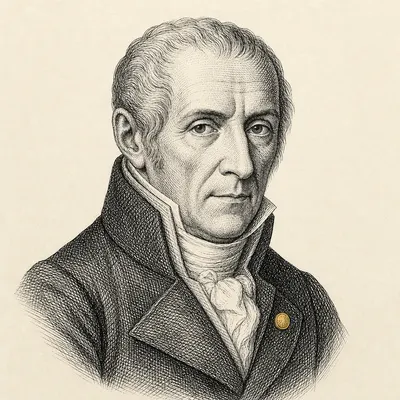 Alessandro Volta 1745–1827
 Georg Simon Ohm 1789–1854
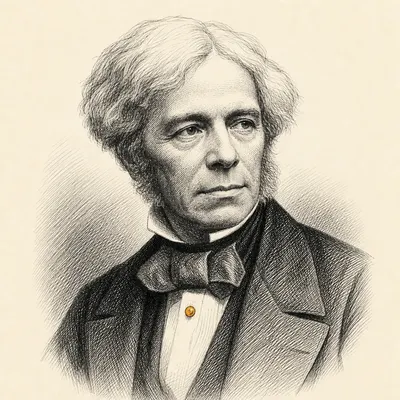 Michael Faraday 1791–1867
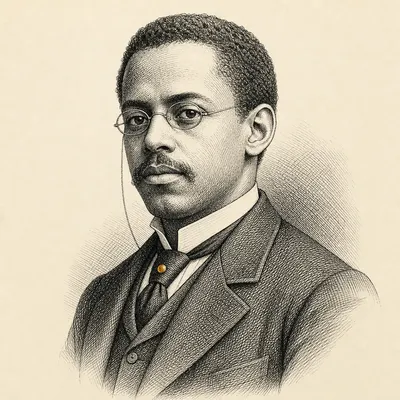 Lewis Latimer 1848–1928
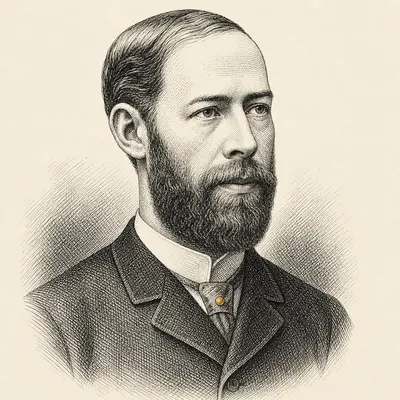 Heinrich Hertz 1857–1894
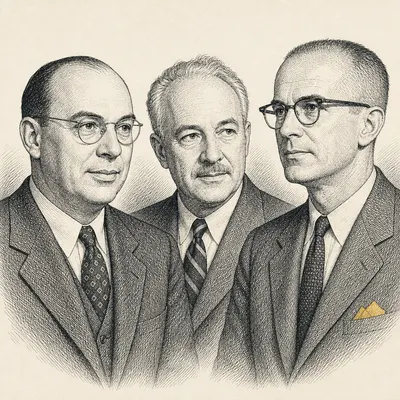 Bardeen, Brattain and Shockley Bardeen 1908–1991 · Brattain 1902–1987 · Shockley 1910–1989
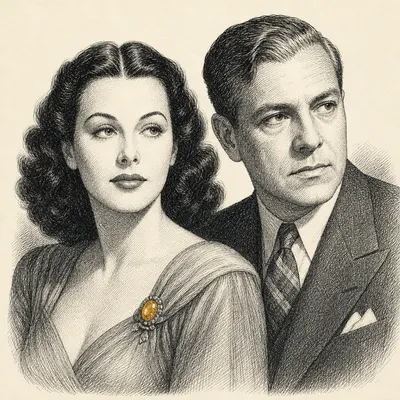 Hedy Lamarr and George Antheil Lamarr 1914–2000 · Antheil 1900–1959
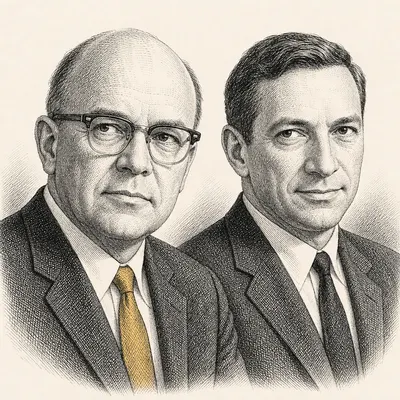 Jack Kilby and Robert Noyce Kilby 1923–2005 · Noyce 1927–1990
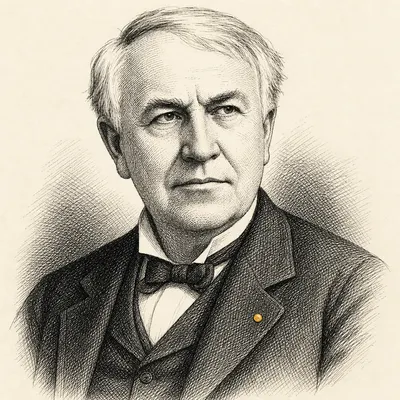 Thomas Edison 1847–1931
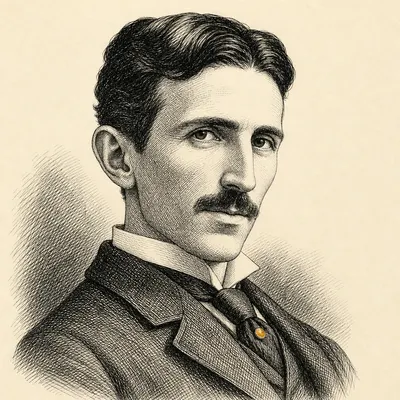 Nikola Tesla 1856–1943
The front door
One moment: a Saturday in 1984, mid-morning, the arcade just opening, the electronics shop’s door propped open, and a kid walking out with the box under their arm. That is the box on the home page. That is the one Ray is remembering.